
一般会計
4件の返信

There is the US — candidate one — running a near 6 per cent of GDP deficit for no good reason except that taxes are un-American, with no plan and seemingly no desire ever to do anything about it.
Then there is Japan — candidate two — which has a massive public debt, an ageing population and has made the odd decision to carry on with deficit spending even after fixing its problem with deflation. Japan is asset rich, however, both its government and its people.
Finally there is Europe — candidate three — where big debtors include countries such as France, Italy and the UK. In Europe there is at least rhetorical attention to the control of debt and deficits, but many nations have made lavish spending promises, which their economies are increasingly ill-equipped to support, and there is almost no political will to confront voters with that harsh reality.
As bond yields tick upwards, with 30-year yields exceeding 4 per cent in Japan and 5 per cent in the US and UK, the fiscal pressure on every indebted economy is mounting.
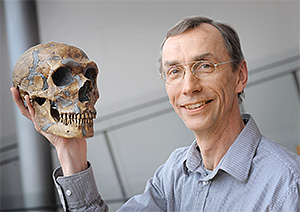
Evolutionary anthropology combines natural sciences and social sciences to understand the evolution of humans, both past and present, and their relationship with non-human primates (hominids and non-hominid primates). It integrates multiple disciplines, including archaeology, behavioral ecology, psychology, primatology, and genetics, to explore how humans have evolved biologically and culturally.
Biological anthropology explores human evolution, biological diversity and primate behavior. Research in this area examines how humans emerged as a species, how we vary today and how biology interacts with environment and culture. From fossil evidence to living populations, biological anthropology connects deep history to present-day questions about health and adaptation.
Polymerase chain reaction, or PCR, is a DNA-copying method used in Biological Anthropology when you need to amplify one specific segment of DNA from a very small sample. Instead of trying to work with all the DNA in a cell or bone fragment at once, PCR targets one region and makes enough copies for analysis.
The process depends on repeated temperature changes. First, the DNA is heated so the two strands separate, which is called denaturation. Then short primers bind, or anneal, to sequences on either side of the target region. After that, DNA polymerase extends from the primers and builds new complementary strands.
That cycle happens again and again, usually 20 to 40 times. Each round doubles the amount of target DNA, so the amount grows very fast. A tiny starting sample can become millions of copies, which is why PCR is so useful when the DNA is scarce, damaged, or mixed with lots of other biological material.
In Biological Anthropology, this matters because researchers often work with old bones, teeth, hair, or environmental samples that do not contain much intact DNA. Ancient DNA is often fragmented, so PCR is one way to focus on a small region that can still be copied. The method does not create the original DNA sample out of nowhere, it only multiplies the part already present.

| 文部科学省の管轄内の科学やサッカー | 文部科学省の管轄外の科学やサッカー |
|---|---|
|
・ 予算配分の論理 ・ 学会・協会の序列 ・ 研究費の申請書文化 ・ 学校教育との接続 ・ 「公的に説明できる成果」を求められる圧力 |
・ 目的が純粋 ・ 参加者の動機が多様 ・ 失敗しても誰にも説明義務がない ・ 変な序列や権威がない ・ 好奇心がそのまま推進力になる |
| 制度の論理が研究やスポーツの論理に入り込む | 「制度から自由であること」が、わくわく感を生む |

From a genomic perspective,
we are all Africans.